5 Telecom Contract Traps That Cost Ohio Businesses Thousands
Telecom contracts are written by carrier legal teams to protect carrier revenue, not yours. These are the five clauses that cause the most financial damage, and how to avoid them.
Rings Jonathan and the team 24x7.
400+ carriers and platforms, compared.
















Written to protect the carrier
Telecom contracts are written by carrier legal teams whose full-time job is protecting the carrier's revenue. They are not written to be easy to read, and they are not written in your interest. After reviewing hundreds of contracts on behalf of Ohio businesses, these are the five clauses that cause the most financial damage.
The five traps
Auto-renewal clauses
If you do not notify the carrier of your intent not to renew within a specific window, typically 30 to 90 days before the contract end date, it automatically renews for another full term. The window is buried in the contract, and businesses miss it.
Annual rate escalation clauses
Many contracts let the carrier raise rates annually by a fixed percentage or by CPI, sometimes uncapped. A 3-year contract with a 4% annual escalator means you pay 8% more in year 3 than you agreed to in year 1.
Early termination fees on full contract value
Many contracts calculate ETFs as the remaining months multiplied by the monthly contract value. In month 6 of a 3-year contract you may owe 30 months of fees. Multiply your own monthly total by the months left to see your exit cost. Already in that spot? See your options for getting out early.
Minimum revenue commitments
If actual usage falls below the committed threshold, because you downsized, moved, or your business changed, you owe the difference anyway. Businesses have paid for capacity they never used.
Change-in-service clauses that reset the term
Some contracts treat any material change, adding lines, upgrading bandwidth, changing a feature package, as a new agreement that resets the term to a new multi-year commitment. A routine upgrade can lock you in for another three years without you realizing it.
Before you sign
- Mark the date 90 days before your notice date on the calendar
- Calculate the maximum ETF exposure under the worst-case scenario
- Ask explicitly, in writing, whether any change order resets or extends your contract term
These clauses are negotiable
Negotiating these clauses out of a contract is possible, but it requires asking before you sign, not after. Carriers will often agree to shorter renewal windows, capped escalators, and pro-rated ETFs for customers they want to keep. The key is knowing to ask.
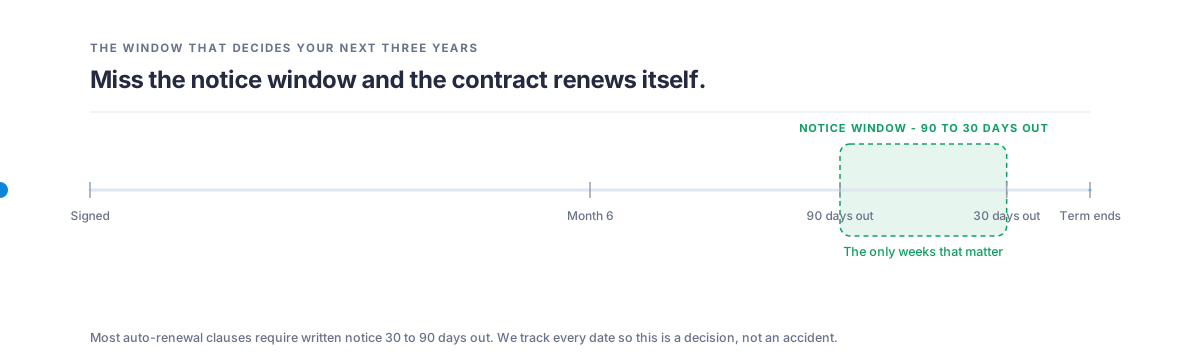
This is the single most expensive date in your telecom estate, and it is almost never in anyone's calendar.
Related
Fewer telecom vendors, fewer problems.
Five vendors means five invoices and five fingers pointing when something breaks.
Read →SecurityThe Cyber Threat Ohio Small Businesses Are Most Unprepared For
Ransomware gets the headlines. The threat most Ohio businesses are unprepared for is quieter: credential compr...
Read → StrategyThe “dedicated account manager” myth.
What carrier support actually looks like after the contract is signed.
Read →ComplianceThe 2026 HIPAA Security Rule Is a Network Problem for Ohio Medical Practices
The overhaul moving through OCR turns old addressable safeguards into hard mandates: encryption everywhere, MF...
Read →Get a second read before you sign
We flag the traps in your contract and quantify what they are costing you. There is no advisory fee.
Book a call